
Why We Enjoy Scary Movies When Fear Feels Awful
You paid to be terrified in a room you could leave at any time. That last part is the whole point.
7 min read
The science of human quirks and everyday psychology
Event segmentation, biased weighting and effort justification
A brain optimised for the common case will occasionally look absurd in the rare one. Forgetting your errand at the kitchen door, wanting to squeeze something adorable, choosing worse when offered more — none of these are malfunctions. Each is a good rule caught in the narrow situation where it does not apply.
10 articles in this hub

Spilling your coffee can make people like you more — but only if you were already competent.
6 min read
You paid to be terrified in a room you could leave at any time. That last part is the whole point.
7 min read

“I could just eat you up” is a real neurological event with a real name.
6 min read
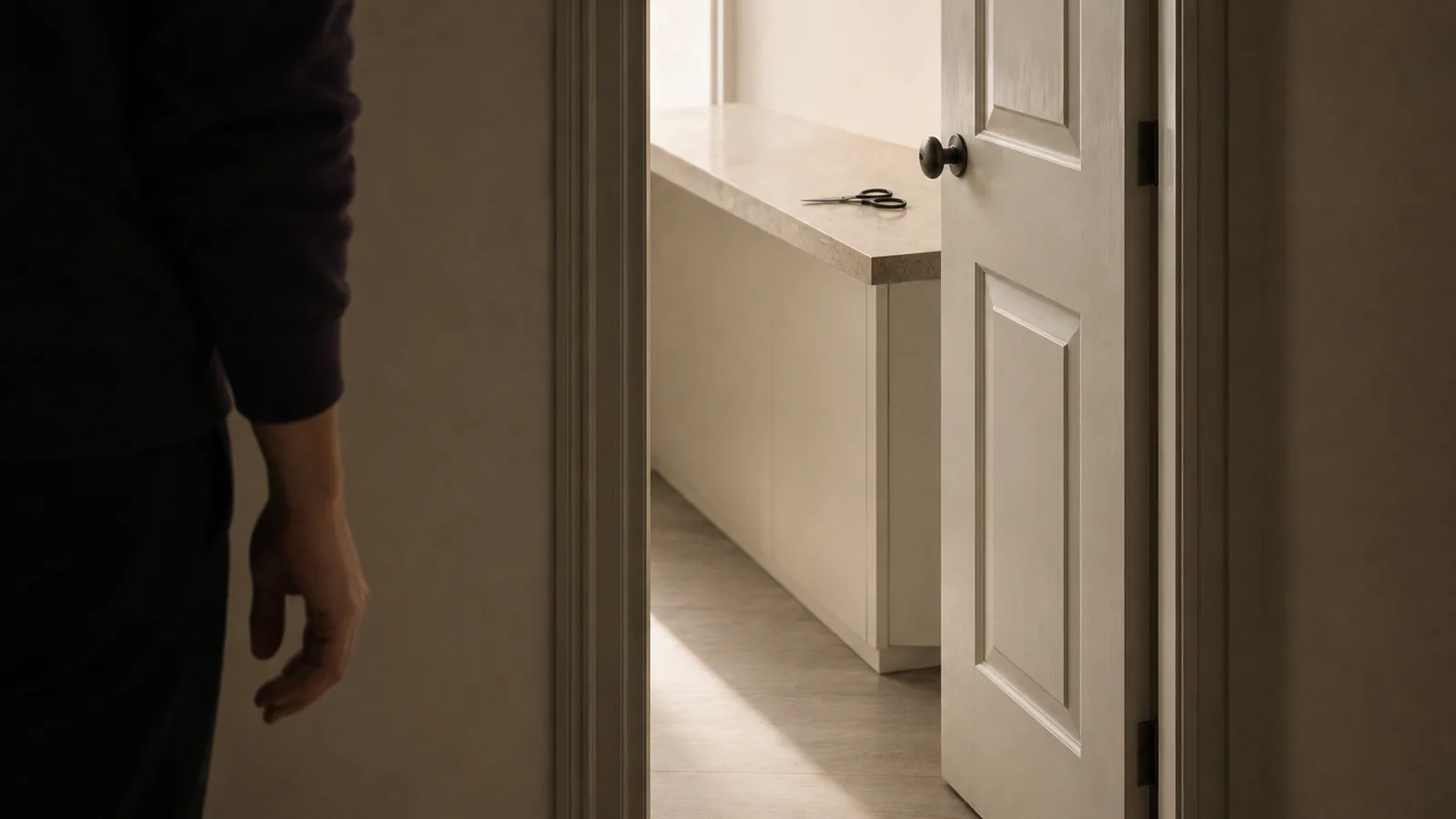
You didn’t forget. The doorway deleted it.
7 min read

Finished tasks vanish from memory. Unfinished ones follow you around all evening.
6 min read

Learn a new word on Monday. Hear it four times by Friday. Nothing changed except you.
5 min read

Nine people said it was great. You’re still thinking about the tenth.
7 min read

Talking to yourself while looking for your keys genuinely helps you find them faster.
6 min read

The wobbly shelf you built is worth more to you than a perfect one. Measurably more.
6 min read

More choice feels better and performs worse. Jam proved it.
7 min read
Why your brain fools you every single day
The strange half-hour between awake and asleep
The signals you send before you decide to send them
No. They are the visible cost of shortcuts that are correct most of the time. Knowing the name of one rarely removes it, but it does make it easier to spot.
Not equally. Some are robust across labs and decades, others are load-dependent or smaller than early headlines suggested. Where the evidence is contested, our articles say so.
Rarely by willpower alone. Changing the environment — writing the goal down, reducing the number of options — reliably works better than trying to out-think the bias in the moment.
This article is educational science trivia about everyday human biology and psychology. It is not medical advice, diagnosis, or treatment, and it is not a substitute for care from a qualified professional.