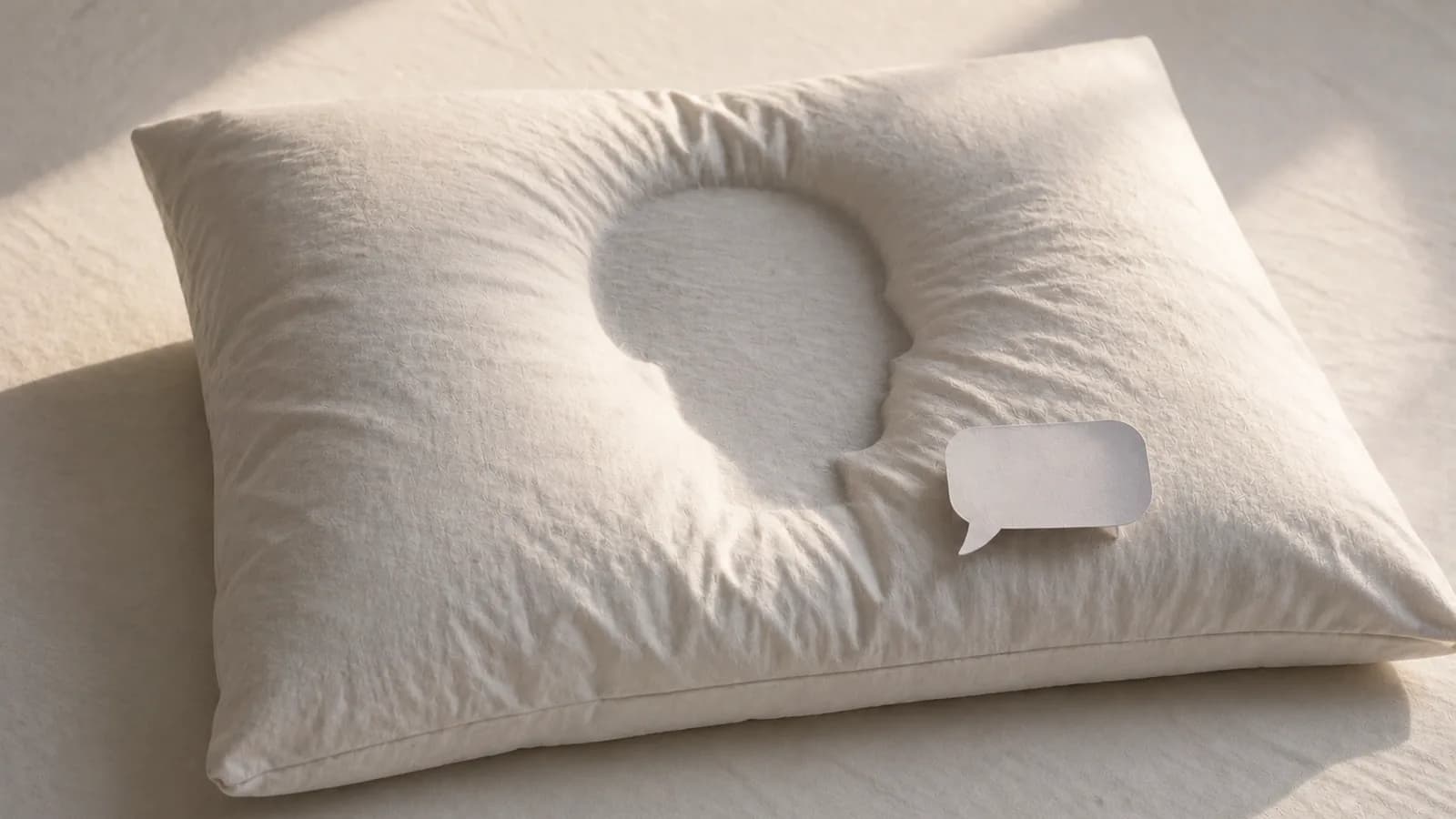
Sleep Talking: What’s Actually Happening When You Talk in Your Sleep
Sleep talkers rarely say anything meaningful. What they say instead is far more interesting.
6 min read
The science of human quirks and everyday psychology
Staged transitions between wake, NREM and REM
Falling asleep is not a switch. It is a handover between systems that shut down at different speeds, and the gap between them is where the odd things live: the falling jolt, the body that wakes before the mind, the hotel room where half your brain refuses to stand down. Everything here happens in that gap.
10 articles in this hub

That falling jolt right before sleep has a name — and a genuinely strange explanation.
6 min read
Sleep talkers rarely say anything meaningful. What they say instead is far more interesting.
6 min read
Some people notice their hands look wrong — and realise they’re dreaming.
8 min read

Yawning probably isn’t about oxygen. The leading explanation involves temperature.
6 min read
For a few seconds you’re awake, aware, and completely still. One switch hasn’t flipped back.
7 min read
Your body starts preparing for your alarm about an hour before it rings.
5 min read

Half your brain stays on watch the first night in a hotel. Literally half.
6 min read

You have roughly ninety seconds to remember a dream. After that, it’s gone.
6 min read

The one-foot-out trick is real, and it works because of a thermostat in your skin.
5 min read
A sleepwalker can open doors, hold a conversation, and remember none of it.
7 min read
Why your brain fools you every single day
The signals you send before you decide to send them
When the sensible rule produces the ridiculous result
Yes. Hypnic jerks are extremely common and are considered a benign feature of the wake-to-sleep transition rather than a disorder.
Both are handovers. Consciousness, muscle control and memory encoding come online and go offline at slightly different times, and the overlap produces the odd states.
If something recurs often, disrupts your rest, or causes real distress, it is worth discussing with a qualified clinician. This site explains mechanisms and does not assess individual cases.
This article is educational science trivia about everyday human biology and psychology. It is not medical advice, diagnosis, or treatment, and it is not a substitute for care from a qualified professional.