The IKEA Effect: Why You Overvalue Anything You Built Yourself
The wobbly shelf you built is worth more to you than a perfect one. Measurably more.
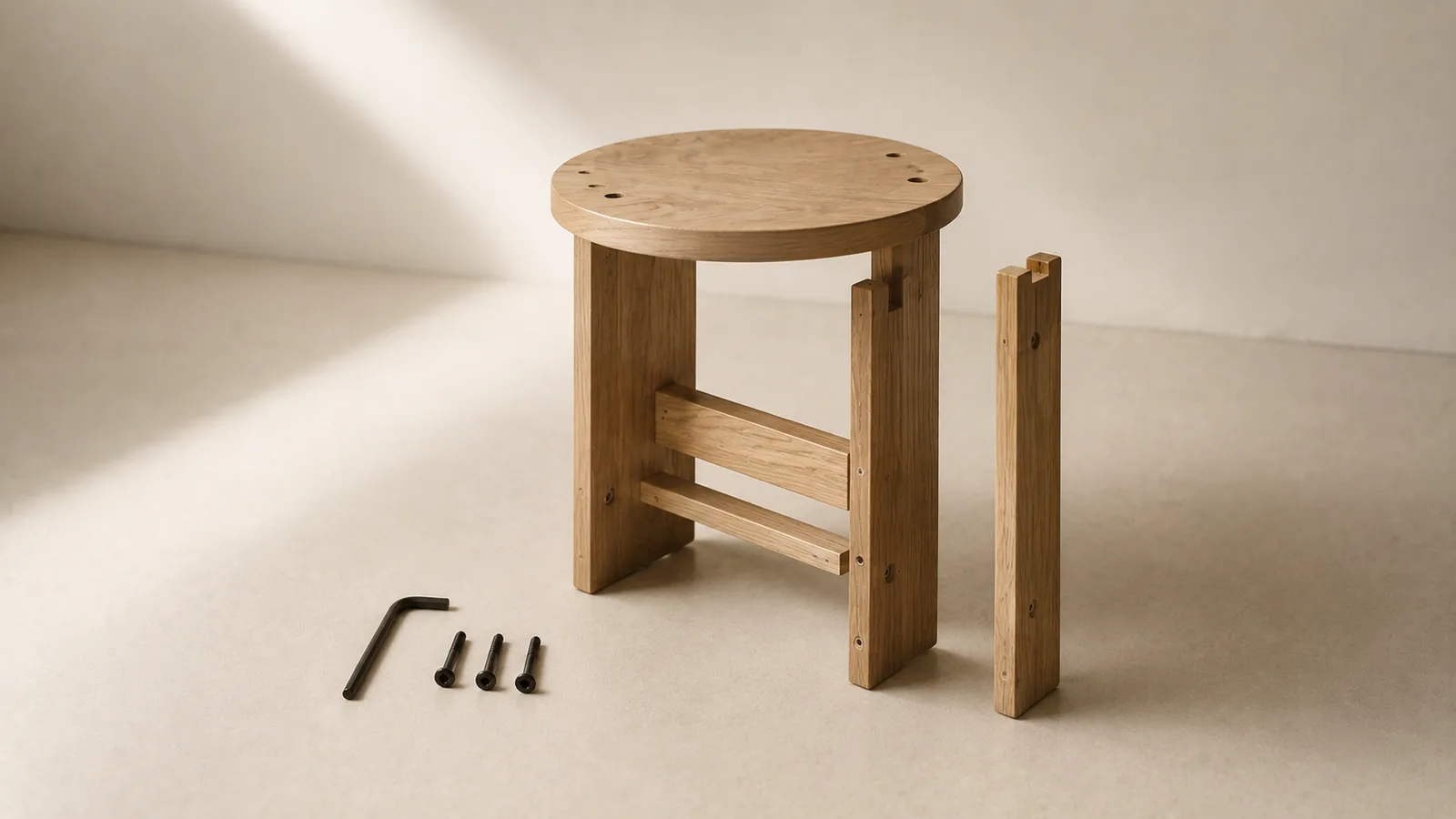
People value things they built themselves far above what anyone else would pay — in the original experiments, roughly 63 percent more for an identical storage box. The effect has a sharp boundary that gets left out of the retelling: it requires successful completion. Participants who assembled something and then took it apart, or who were stopped partway, showed no effect at all.
This is also one of the few behavioural-economics findings from that era to have survived a large meta-analysis in good condition, which makes it worth taking more seriously than most of its neighbours.
The original experiments
Michael Norton, Daniel Mochon and Dan Ariely published the work in 2012, naming it after the furniture retailer whose products arrive requiring assembly. Across four studies, participants assembled IKEA storage boxes, folded origami, and built Lego sets, then indicated what they would pay for their own creation and for an identical one made by someone else.
Builders valued their own boxes around 63 percent above what non-builders would pay for the same object. In the origami studies, participants valued their own amateur folding at close to what they would pay for an expert's — and expected other people to agree, which is the part that shades from preference into misjudgement.
The effect held for people who described themselves as keen do-it-yourselfers and for those who did not, and it appeared for both practical and decorative objects. The boxes and Lego sets permitted no customisation, so this was not about self-expression. Assembly alone was enough.
The boundary that gets dropped
Norton's group did not simply demonstrate the effect; they went looking for where it stops, and found a clean answer.
When participants built something and then disassembled it, the premium vanished. When they were permitted to complete only half the assembly steps, it vanished again. Effort by itself does not raise valuation. Effort that produces a finished thing does.
That boundary is theoretically informative rather than a mere caveat. It rules out simple time-and-trouble accounting — an hour spent is an hour spent whether or not the box survives — and points toward completion, competence and the resulting sense of ownership as what actually drives the valuation.
It also makes an interesting pair with the other completion effect in this hub. Unfinished goals stay active and intrusive, which is why an incomplete task keeps surfacing all evening; unfinished objects, by contrast, generate no attachment at all. Interruption keeps a goal alive in your head and kills the value of the thing in your hands.
Where it came from theoretically
The IKEA effect sits inside a much older tradition. Effort justification, from cognitive dissonance theory, holds that people resolve the discomfort of having worked hard for something by deciding it was worth it.
The canonical demonstration is Elliot Aronson and Judson Mills' 1959 study, in which participants who underwent an embarrassing initiation to join a discussion group rated the group — deliberately made dull — more favourably than those admitted easily. The IKEA effect applies the same logic to physical objects and adds the completion requirement.
The commercial history is older still. When instant cake mixes arrived in the 1950s, some were reportedly resisted because they made baking too easy, and the standard telling has manufacturers responding by requiring the cook to add an egg. That story is repeated widely and its documentary basis is thin, so treat it as illustrative rather than evidential.
How well has it replicated?
Better than most findings of its vintage, and this is the section worth reading carefully given how much of this hub is caveats.
A meta-analysis published in 2026 in Psychology & Marketing synthesised 55 studies covering over 5,400 participants and found a significant moderate effect of self-assembly on valuation, around d = 0.57, along with consistent secondary effects on liking, sense of ownership and self-concept. The effect remained robust across moderators including whether the product could be customised and whether it was physical or digital.
Independent conceptual replications have also been published in marketing journals, and developmental work has examined when the effect emerges in children. That is a substantially healthier evidence base than the average behavioural-economics headline finding.
One piece of context to hold
Dan Ariely, a co-author of the original paper, has been the subject of significant controversy over data integrity in unrelated research, including a retracted paper on honesty pledges. No such concern has been raised about the IKEA effect studies specifically.
The reason to mention it is methodological rather than personal: when a finding's credibility rests on a single lab, an author-level problem anywhere becomes a reason for caution everywhere. The IKEA effect is not in that position — its support now comes from many independent groups and a meta-analysis, which is precisely what makes an author controversy survivable.
When does it start?
Developmental work has looked for the effect in children, and it appears surprisingly early — young children value objects they assembled above identical ones assembled by someone else, though the size and the mechanism appear to shift with age. Later work comparing British and Indian children examined how collaboration and cultural context alter the effect, finding that co-creation changes valuation in ways a purely individual effort-justification account does not straightforwardly predict.
That is useful evidence for a functional question. An effect present in young children across cultures is less likely to be a habit of consumer societies and more likely to reflect something general about ownership and effort.
Where it shows up
Once named, it is visible everywhere: flat-pack furniture, meal kits requiring a few steps, software that asks you to configure it before use, onboarding flows that make you build a profile, and every organisation where a plan you helped draft is obviously better than an equally good one handed to you.
The practical warning is the boundary condition inverted. Effort raises valuation only when the task succeeds; a task hard enough to defeat people produces frustration and no premium, and possibly an aversion. Anyone designing a deliberately effortful experience is betting on completion rates, which is also why the effect makes an instructive contrast with the assortment size that supposedly overwhelms shoppers — one of these two findings held up under meta-analysis and the other did not.
Same trick, different system
Why We Whisper in the Dark and Go Quiet in Big Rooms
Frequently asked questions
The tendency to place a higher value on things you assembled yourself. In the original studies participants valued self-assembled storage boxes around 63 percent above what non-builders would pay for identical items, and rated their own amateur creations as near-equivalent to expert work.
No, and this is the key boundary. Participants who assembled something and then took it apart, or who completed only half the steps, showed no valuation premium. Effort alone is insufficient — the task has to result in a finished product.
Yes, unusually well for a finding of its era. A 2026 meta-analysis of 55 studies covering over 5,400 participants found a significant moderate effect of around d = 0.57, robust across moderators including customisation and product type.
The leading account is effort justification from cognitive dissonance theory, combined with the sense of ownership and competence that successful completion produces. The completion requirement rules out simple accounting of time and trouble.
It is a specific case of it. Effort justification is the broader principle that people value what they worked for, demonstrated as early as 1959. The IKEA effect applies it to self-assembled objects and adds the finding that completion is required.
This article is educational science trivia about everyday human biology and psychology. It is not medical advice, diagnosis, or treatment, and it is not a substitute for care from a qualified professional.