Why Do We Blush? The Only Expression You Can’t Fake
Blushing is the one signal you cannot fake or switch off. That’s exactly why it exists.
Blushing is vasodilation of the facial blood vessels driven by the sympathetic nervous system — and it is the only human expression that cannot be faked, suppressed, or produced on demand. Darwin called it the most peculiar and most human of all expressions, and the puzzle he raised is still open: why would evolution build an involuntary public broadcast of your own embarrassment?
Most expressive quirks are interesting because of what they reveal about perception. This one is interesting because it appears to work against the person producing it, which is the kind of thing evolution usually removes rather than preserves.
What is physically happening
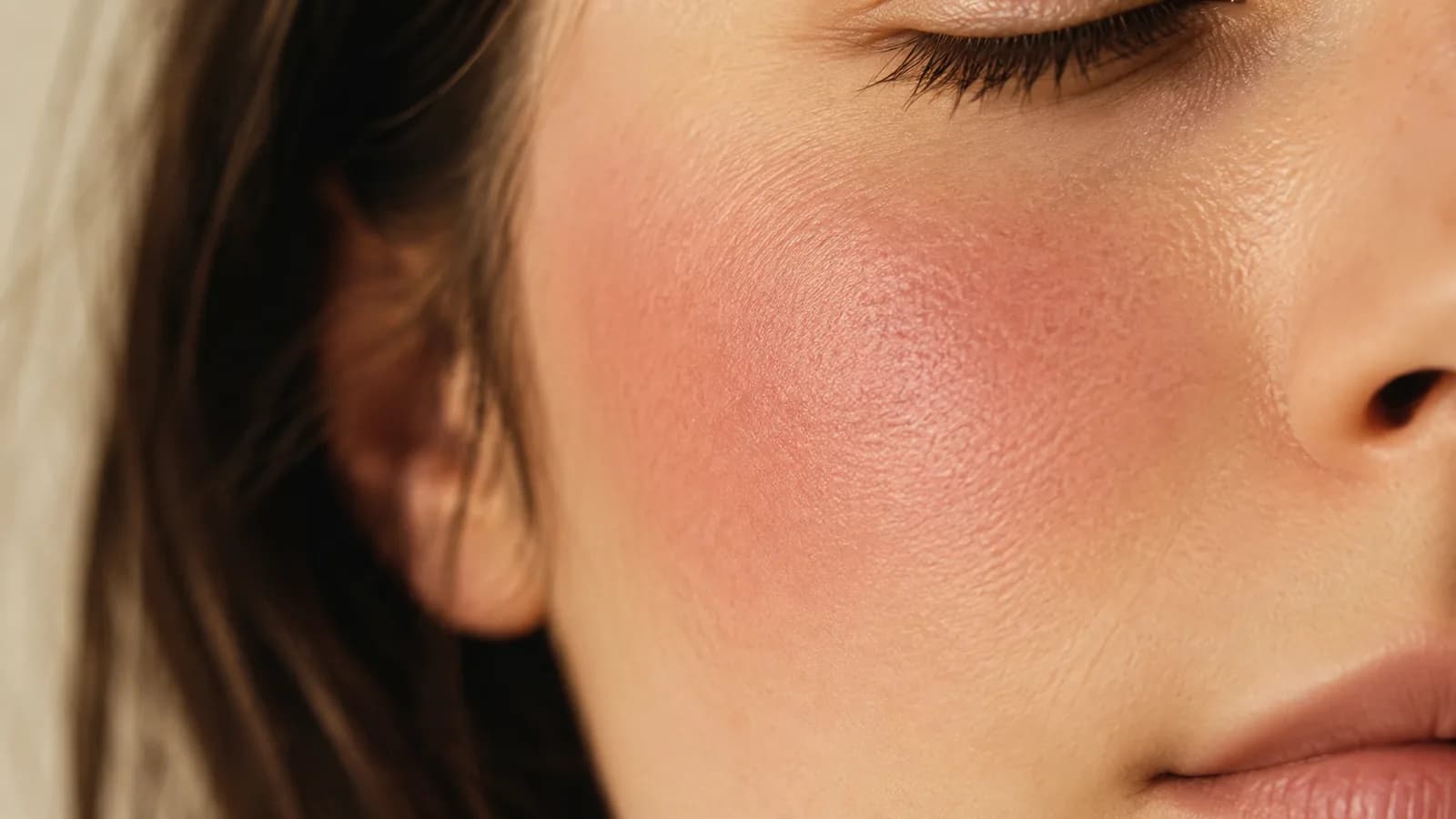
A blush is increased blood flow through the vessels of the face, ears, neck and upper chest, producing visible reddening or darkening and a measurable rise in skin temperature. It is mediated by the sympathetic nervous system, which in most of the body drives vasoconstriction — the facial vasculature is unusual in dilating instead.
The mechanism appears to involve beta-adrenergic receptors in the facial veins, and pharmacological blockade of those receptors partially reduces blushing even in situations that reliably elicit embarrassment. The affected regions are rich in arteriovenous anastomoses, direct connections between arteries and veins that permit rapid, large changes in local blood flow.
That anatomical specificity matters for interpretation. A blush is not a general side effect of arousal reaching the face; it has its own circuitry, which is what you would expect of something selected for rather than tolerated.
It is also worth separating a blush from a flush. Heat, exercise and alcohol produce facial reddening through different routes, are not restricted to the same regions, and do not require a social trigger. And unlike a smile — which is automatic in response to another person's smile but can also be produced deliberately and contagiously — a blush has no voluntary version at all. No actor can summon one.
The paradox
Consider what the signal does. At the moment you most want to appear composed, your face announces that you are not. You cannot start it, stop it, or fake it. It amplifies exactly the state you would prefer to conceal, and everyone present can see it.
From a signalling perspective, that combination is the interesting part rather than the problem. A signal that cannot be faked is a signal that can be trusted. Anything a liar could produce at will conveys nothing; a display that is impossible to counterfeit carries information precisely because of its involuntary nature.
The remedial-signal account
The leading functional explanation is that blushing is a non-verbal apology. It communicates that you are aware of the social rule, that you know you have fallen short of it, and that you care — an appeasement display that discourages a hostile response and helps repair the breach without anyone having to say anything.
There is direct evidence for this. Experimental work has repeatedly found that people who blush after committing a social transgression are judged less negatively than people who do not blush in the same circumstances, and that observers are more likely to attribute an act to embarrassment rather than malice when a blush accompanies it.
Where the account gets complicated
The face-saving effect is real but conditional. Peter de Jong and colleagues have argued that the social consequences of blushing vary substantially with context: in situations that clearly involve some misbehaviour, the blush repairs. In ambiguous situations — or when someone is merely the centre of attention with no transgression at all — it can have undesirable effects, including inviting the inference that the blusher has something to be guilty about.
So the honest version is not "blushing helps you." It is that blushing supplies information which is useful when there is a specific lapse to explain, and potentially damaging when there is not.
Does blushing require thinking about what others think?
This is the live theoretical question, and it matters beyond blushing itself: it bears on whether self-awareness requires higher-order reasoning about other minds. One camp holds that blushing follows from mentalising — modelling how you appear in someone else's eyes. The other holds it is a fast, pre-reflective emotional response to social exposure.
A 2024 study in Proceedings of the Royal Society B tested this directly. Milica Nikolić and colleagues had forty participants aged sixteen to twenty watch pre-recorded videos of themselves singing karaoke inside an MRI scanner, with videos of other people as a control, while measuring cheek temperature as an index of blushing.
Participants blushed more watching themselves than watching others, as expected. But those who blushed more showed greater activation in the cerebellum and paracentral lobe, and more time-locked processing in early visual cortices — not in the medial prefrontal cortex and right temporoparietal junction associated with mentalising. The authors concluded that blushing may be driven by emotional arousal and attention to self-relevant stimuli, without requiring higher-order socio-cognitive processing.
Read that as one strong piece of evidence rather than a settled answer. The sample was forty adolescents and young adults, cheek temperature is a proxy rather than a direct measure of the blush, the design was correlational, and the authors note the study was not pre-registered. It shifts the argument; it does not end it.
Is blushing uniquely human?
Darwin thought so, and the claim has been repeated ever since. It is now under some pressure — work published in 2024 reported emotional facial flushing responses in chickens, which at minimum complicates the tidy version.
The cautious statement is that visible emotional facial reddening tied to social self-consciousness is exceptionally well developed in humans and requires unusual anatomy to be visible at all. Whether the underlying autonomic response is uniquely ours is a different and less settled question.
When blushing stops being a quirk
For most people this is a passing nuisance. For some it becomes a persistent fear of blushing that shapes what they are willing to do, which is a recognised clinical concern and one that responds to treatment. If that describes your experience, it is worth discussing with a qualified professional — an article about the biology of vasodilation is not the right place to look for help with it.
For everyone else, the useful reframe is that blushing belongs to a family of autonomic responses that arrive without asking and are not yours to authorise — including the chills a piece of music can produce. The difference is that this one is visible to everybody in the room.
Same trick, different system
What Causes Hiccups — and Why They’re So Hard to Stop
Frequently asked questions
Blushing is driven by the sympathetic nervous system acting on facial blood vessels, and there is no voluntary pathway to it. Unlike a smile or a frown, no one can produce a blush on demand, and effort to suppress it typically has no direct effect.
The leading account is that it functions as a non-verbal apology — signalling awareness of a social rule and regret at breaking it. Because it cannot be faked, it is a credible signal, and experiments show people who blush after a transgression are judged less negatively than those who do not.
No. The face-saving effect is context-dependent. When there is a clear lapse to explain, blushing tends to repair the situation. In ambiguous contexts, or when someone is simply the centre of attention, it can invite the inference that they have something to feel guilty about.
Not necessarily. A 2024 neuroimaging study found that greater blushing was associated with activity in regions linked to emotional arousal and attention rather than mentalising regions, suggesting blushing can occur without higher-order reasoning about other minds. The question remains debated.
Darwin claimed it was, and visible social blushing is exceptionally developed in humans. The claim has been complicated by 2024 work reporting emotional facial flushing in chickens, so whether the underlying response is uniquely human is not settled.
This article is educational science trivia about everyday human biology and psychology. It is not medical advice, diagnosis, or treatment, and it is not a substitute for care from a qualified professional.